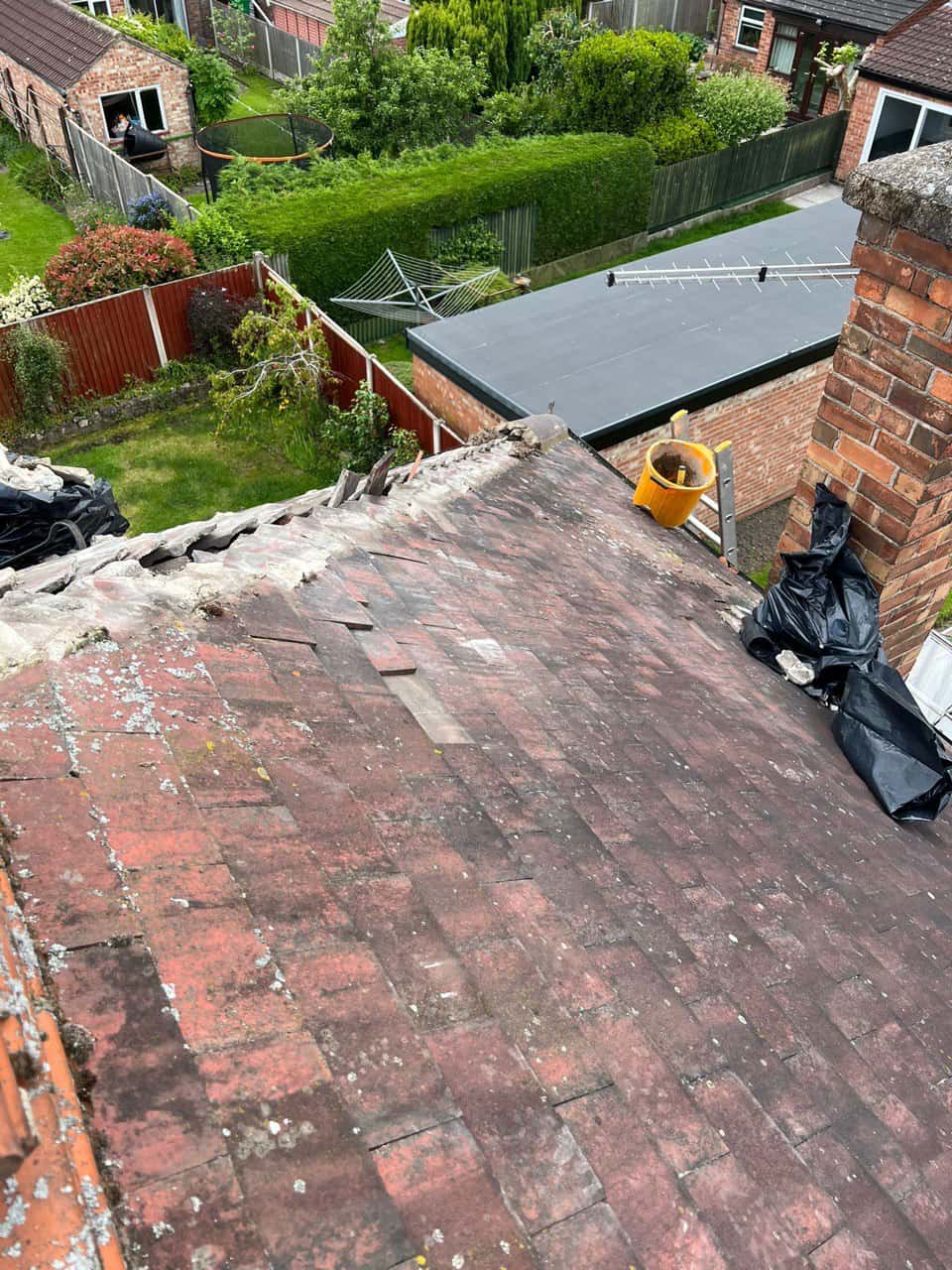
When a roof develops a problem, deciding what to do next is not always straightforward. A visible leak, damaged tiles or repeated maintenance issues may raise concerns about the wider condition of the roof, but these signs alone do not necessarily tell you whether a repair is sufficient or replacement should be considered.
For homeowners in Havant, Hampshire, the sensible next step is usually to arrange a professional assessment of the roof before deciding on the extent of the work. The purpose of an inspection is not simply to find the most obvious defect. It should establish why the problem has developed, how much of the roof is affected and whether the existing roofing system remains capable of performing reliably.
Making the decision based on the roof’s actual condition can help avoid both unnecessary replacement and repeated repairs that fail to address wider deterioration.
How Can a Roof Assessment Help You Choose Between Repair and Replacement?
A professional roof assessment provides the information needed to make a more informed decision. Instead of judging the roof from a single leak or visible defect, the condition of the affected area can be considered alongside the wider roofing system.
Important factors include:
- The location and extent of the current problem
- The condition of surrounding tiles, slates or roof coverings
- Whether water ingress is localised or widespread
- The condition of flashing, valleys, ridges and roof junctions
- Whether underlying components have deteriorated
- The roof’s history of previous repairs
- Whether similar problems are developing elsewhere
- Whether the existing materials can support a reliable repair
Considering these points together provides a much clearer indication of what the roof actually requires.
Start by Identifying the Actual Roofing Problem
Before deciding between repair and replacement, the first priority should be establishing exactly what has gone wrong.
Some roofing problems are obvious, such as a displaced tile or visibly damaged section. Others can be considerably harder to diagnose. A damp patch inside the property, for example, confirms that moisture is present but does not necessarily reveal where water entered the roof.
Rainwater can travel beneath the roof covering before becoming visible internally. This means that concentrating solely on the area directly above a damp patch can lead to the wrong section being repaired.
Accurate diagnosis provides the foundation for making the correct decision.
Is the Damage Localised or Widespread?
The extent of deterioration is one of the most useful factors when deciding between roof repair and replacement.
A clearly defined problem affecting a small area of an otherwise serviceable roof will often favour repair. Examples might include individual damaged tiles, a defective section of flashing or a localised problem at a roof junction.
The situation changes when deterioration is present across several sections. Multiple areas of damage can indicate that the latest problem is part of a wider decline in the roof’s condition.
The important distinction is therefore not simply whether the roof has a problem, but how much of the roofing system is affected by it.
Look Beyond the Most Visible Damage
The first defect you notice is not necessarily the only one that matters.
Roofing systems consist of several components working together to prevent water ingress. Tiles or slates may appear to be the immediate concern, while deterioration to the underlay, battens, flashing or other details may also be contributing to the problem.
A proper assessment should therefore consider both the visible roof covering and the relevant components around and beneath it.
This wider view can establish whether repairing one area will restore dependable performance or whether deterioration extends beyond what can initially be seen.
Consider Whether the Problem Has Happened Before
The history of the roof can provide valuable information.
An isolated defect on a roof that has otherwise performed reliably is very different from a roof that requires attention repeatedly. If the same area continues to leak after previous repairs, there may be an underlying issue that has not yet been identified.
Similarly, if new defects are appearing across different sections of the roof, this can suggest that deterioration is becoming more widespread.
Previous repairs do not automatically mean replacement is necessary. However, the frequency, location and nature of those repairs should form part of the overall assessment.
Does an Older Roof Automatically Need Replacing?
No. Roof age should provide context rather than determine the decision by itself.
An older roof can still contain serviceable materials and may only require a specific repair. Equally, a roof does not have to reach a particular age before more extensive deterioration can occur.
The more useful consideration is how the roof is actually performing.
If the covering remains secure, the main details are functioning correctly and the current defect can be repaired effectively, age alone may provide little reason for replacement. When age is accompanied by widespread deterioration, recurring leaks and fragile materials, however, it becomes more relevant to the overall decision.
Can the Existing Roof Support a Lasting Repair?
Not every defect that can physically be patched should necessarily be treated as an isolated repair.
A reliable repair needs suitable surrounding materials. New or replacement components often have to integrate with the existing roof covering, so neighbouring materials need to remain secure enough to support the work.
If the surrounding roof is sound, this may be straightforward. If adjacent materials have become brittle, loose or extensively deteriorated, repairing one small section may leave other weaknesses unresolved.
Assessing repairability in this way helps distinguish between work that simply addresses today’s visible problem and work that can reasonably be expected to restore dependable roof performance.
What Do Repeated Leaks Tell You?
Repeated leaks deserve particular attention because their pattern can reveal whether the problem is localised or more extensive.
One leak that continually returns from the same area may indicate an unresolved defect around a particular tile, flashing detail, valley or junction. Once correctly identified, the problem may still be suitable for targeted repair.
Several independent leaks developing around the roof present a different situation. They may suggest that multiple components are deteriorating at a similar stage.
Rather than treating each leak separately without considering the others, a whole-roof assessment can determine whether they share an underlying cause.
Why Roof Details Matter in the Decision
Many roof failures develop around details rather than across the main covering itself.
Flashing, valleys, ridges, verges and junctions are designed to manage water at vulnerable points. When one of these areas deteriorates, substantial water ingress can sometimes occur even though most of the roof remains in good condition.
This is important when considering replacement because the severity of an internal leak does not necessarily reflect the condition of the whole roof.
A relatively significant leak caused by one defective detail may still be entirely repairable. The decision should therefore be guided by the extent of the roofing failure rather than simply the amount of water entering the property.
Avoid Making the Decision From Ground Level Alone
Some roofing defects can be visible from outside the property, but a ground-level view provides limited information.
It may be possible to notice a missing tile or obvious displacement, but the condition of less visible details can be difficult to judge. Problems around junctions, under coverings or within particular sections may only become apparent through closer assessment.
This is one reason homeowners can find the repair-or-replace decision difficult to make independently.
A professional inspection provides a better understanding of how individual defects relate to the overall condition of the roof.
When Does Repair Make Sense?
Repair generally makes sense when the problem is identifiable, limited in extent and surrounded by roofing materials that remain in serviceable condition.
The objective should be to restore the affected area correctly rather than simply provide a temporary solution to the visible symptom.
A suitable repair might involve replacing damaged roofing materials, correcting a defective detail or addressing a localised weakness that has allowed water to enter.
When the wider roof remains dependable, targeted work can be an appropriate way of restoring its performance without disturbing unaffected areas.
When Should Replacement Be Considered?
Replacement becomes more relevant when deterioration is no longer confined to individual defects.
If roofing materials are failing across several areas, leaks are becoming increasingly common or the existing roof can no longer provide a suitable basis for reliable repairs, continuing to address each problem separately may become less effective.
The decision should still follow a proper assessment. One serious-looking defect does not automatically justify replacing an entire roof.
The purpose of considering replacement is to address genuinely widespread deterioration rather than simply respond to the latest visible problem.
Why an Impartial Assessment Is the Sensible Next Step
When you are unsure whether to repair or replace your roof, you should not have to make the decision without understanding its condition.
A thorough assessment can separate localised problems from wider deterioration and establish which parts of the roofing system remain serviceable. This allows any recommendation to be proportionate to what has actually been found.
At Havant Roofing Repairs, our approach is to identify the underlying roofing issue before recommending the appropriate work. If a targeted repair is suitable, the focus should remain on restoring the defective area. If the roof shows more extensive deterioration, this can be explained clearly so that the wider condition is understood.
For homeowners in Havant, Hampshire, this provides a practical starting point when the correct course of action is uncertain.
Conclusion
If you are unsure whether your roof needs repairing or replacing, the sensible next step is to have its condition properly assessed rather than making assumptions from a single visible problem.
The decision should consider the extent of deterioration, condition of surrounding materials, history of previous problems, underlying roofing components and whether defects are isolated or appearing across several areas. A sound roof with a localised problem can often be repaired successfully, while widespread deterioration may justify a more comprehensive solution.
If you are concerned about the condition of your roof in Havant, Hampshire, contact Havant Roofing Repairs to arrange an assessment. We can identify the underlying issue, evaluate the relevant areas of the roof and recommend an appropriate course of action based on what the roof genuinely requires.
Call us on: 023 8235 7284
Click here to find out more about Havant Roofing Repairs
Click here to complete our contact form and see how we can help with your roofing needs.